We take our time
Every child is unique, and children develop at different rates. Progress comes at the child's own pace, and that is never rushed.
About Rays Childcare
Our approach is child-centred and individualised. We consider each child's developmental stage, interests, communication style, learning preferences, strengths and support needs when planning activities and interventions.
Our approach
Every child deserves an environment where they feel safe, respected, understood and encouraged to participate.
Our approach is child-centred and individualised. We consider each child's developmental stage, interests, communication style, learning preferences, strengths and support needs when planning activities and interventions.
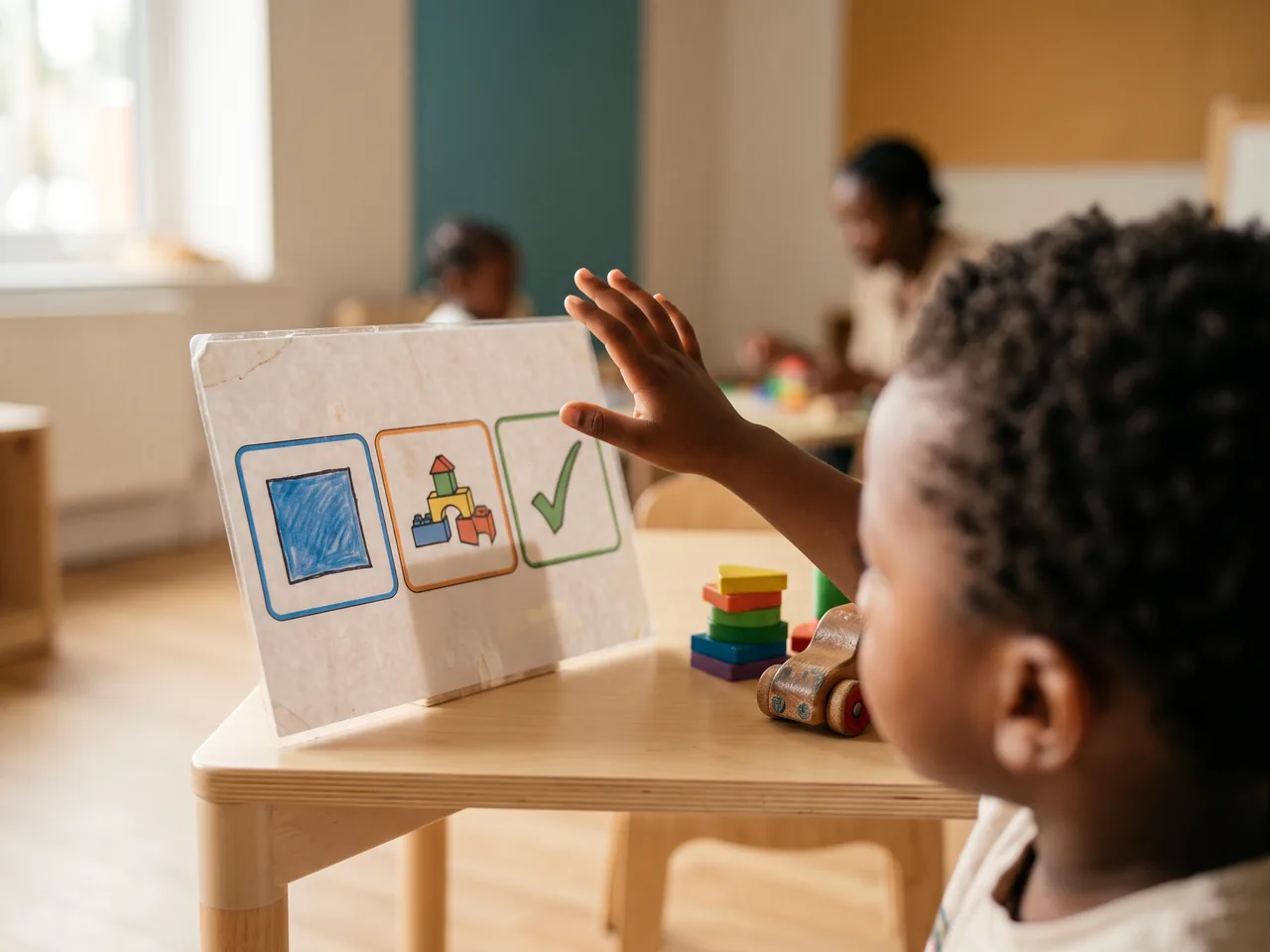
Depending on the child's needs, learning and support activities may include play-based learning, structured learning activities, communication and language activities, social interaction and group activities, visual supports and schedules, sensory and motor activities, imitation and modelling, positive reinforcement, practical skill-building, task analysis and step-by-step learning, and prompting that gradually builds independence.
How we help
Depending on the child's needs, learning and support activities may include any of the following. No two children receive the same mix.
Where appropriate, structured approaches such as PECS-based communication strategies and TEACCH-informed activities may also be incorporated to support communication, participation, learning and independence.
In practice
Every child's session looks different. This is the general shape of ours — the detail always flexes around the child in front of us.
We greet the child, follow their lead, and take a moment to read their mood before anything else begins.
We prepare the space and materials with visual supports in place, so the child knows what is coming next.
We model, prompt, and practise in short blocks, adjusting the task difficulty as the child responds.
Skills are rehearsed in different ways so they generalise beyond the table and into everyday life.
We note what went well and what to work on next, then share it with you so home and school stay aligned.
What guides us
Every child is unique, and children develop at different rates. Progress comes at the child's own pace, and that is never rushed.
We start from what a child does well and build outward from there, because confidence grows on solid ground.
To what a child says, to what they show us without words, and to what families tell us about life at home.
An activity only counts if it helps a child do something for themselves. That is the measure we use.
Parents, caregivers, educators and professionals all shape the outcome. We are one part of a wider team.
We believe every child should have the opportunity to participate, learn and develop according to their abilities.

Inclusion and independence
We believe every child should have the opportunity to participate, learn, communicate and develop according to their abilities.
Children may sometimes require additional support to access learning or participate fully in everyday activities. With appropriate guidance, encouragement and consistent support, many children can develop greater confidence and independence.
Our focus is therefore not only on areas of difficulty but also on identifying and building upon each child's strengths.
Whether a child is learning to communicate a need, follow an instruction, remain engaged in an activity, manage frustration, develop early academic skills, interact with others, or complete everyday tasks independently, every step of progress matters.
We celebrate individual achievements, build on strengths, and provide patient and consistent support as children develop new skills.
Skills for life
At Rays Childcare, our goal is to support children not only in their immediate learning and developmental needs but also in building practical skills for life.
If you have concerns about your child's communication, behaviour, attention, learning, social interaction or developmental progress, early professional assessment and individualised support can help identify appropriate areas of intervention and learning support.
Every child has potential. With understanding, appropriate support, meaningful learning experiences and collaboration, we can help children learn, communicate, connect and thrive.
We would rather answer your questions early than have you wondering. Get in touch and tell us a little about your child.