Who we support

A range of needs, each child met individually

Our work does not exclude children who may experience a range of neurodevelopmental, communication, learning, behavioural and developmental challenges. Scroll to explore the five areas of development we support.

Children we work with

Supporting children with diverse developmental and learning needs

Our work does not exclude children who may experience a range of neurodevelopmental, communication, learning, behavioural and developmental challenges, including:

  • Autism Spectrum Disorder (ASD)
  • Speech and language delays
  • Communication difficulties
  • Attention-Deficit/Hyperactivity Disorder (ADHD)
  • Behavioural and emotional difficulties
  • Dyslexia
  • Dysgraphia
  • Difficulties with attention and concentration
  • Learning difficulties
  • Delayed cognitive or developmental skills
  • Social communication and interaction difficulties
  • Difficulties following instructions and completing tasks
  • Fine-motor and handwriting difficulties
  • Self-help and adaptive skill challenges
  • Other neurodivergent developmental needs

Our aim is to create supportive learning experiences in which children are encouraged to develop at their own pace while building on their existing strengths and abilities.

The five areas of development we support are listed below.

Area 01

Communication and language

We help children find a reliable way to express what they want and understand what is said to them — using words, signs, symbols, pictures or a device, whichever works best for that child.

  • Expressive and receptive language
  • Functional communication
  • Vocabulary development
  • Sentence formation
  • Speech clarity and articulation
  • Following verbal instructions
  • Answering questions
  • Imitation and verbal responding
  • Social communication

What this looks like in practice

We meet the child at the level they are communicating from now, and add one step at a time. A child who uses gestures gets taught to add a word; a child who speaks but rarely answers questions gets practised in responding to a question.

How we spot progress: a new sound or word appearing spontaneously, following a two-step instruction, or initiating an interaction rather than only answering one.
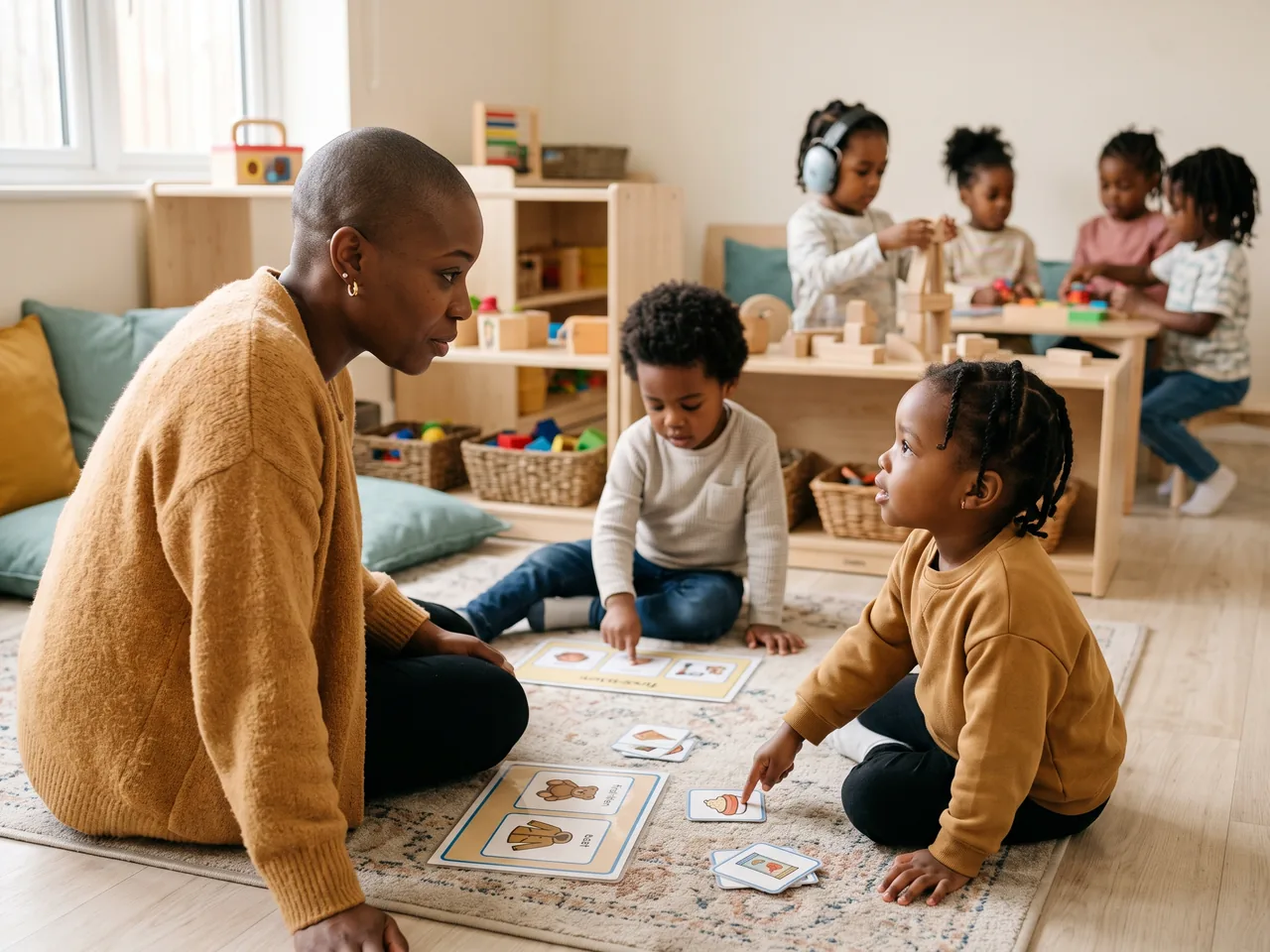
A practitioner sits on the floor facing a child who points at a picture card; another child sits beside them pointing at a first-then board.

Area 02

Behaviour and emotional development

We work with children on managing big feelings, expressing their needs in ways that work, and coping with the moments that are hard — transitions, waiting, being told no.

  • Managing frustration and emotional responses
  • Developing appropriate ways to express needs
  • Improving cooperation and participation
  • Building tolerance and patience
  • Managing transitions between activities
  • Developing emotional regulation skills
  • Supporting positive behaviour and social participation

What this looks like in practice

We plan for the hard moment before it happens: a clear visual schedule, a first-then board, warning before a change, and a predictable way to ask for a break.

How we spot progress: shorter recovery after a difficult moment, joining an activity with less prompting, or recovering independently when something changes.

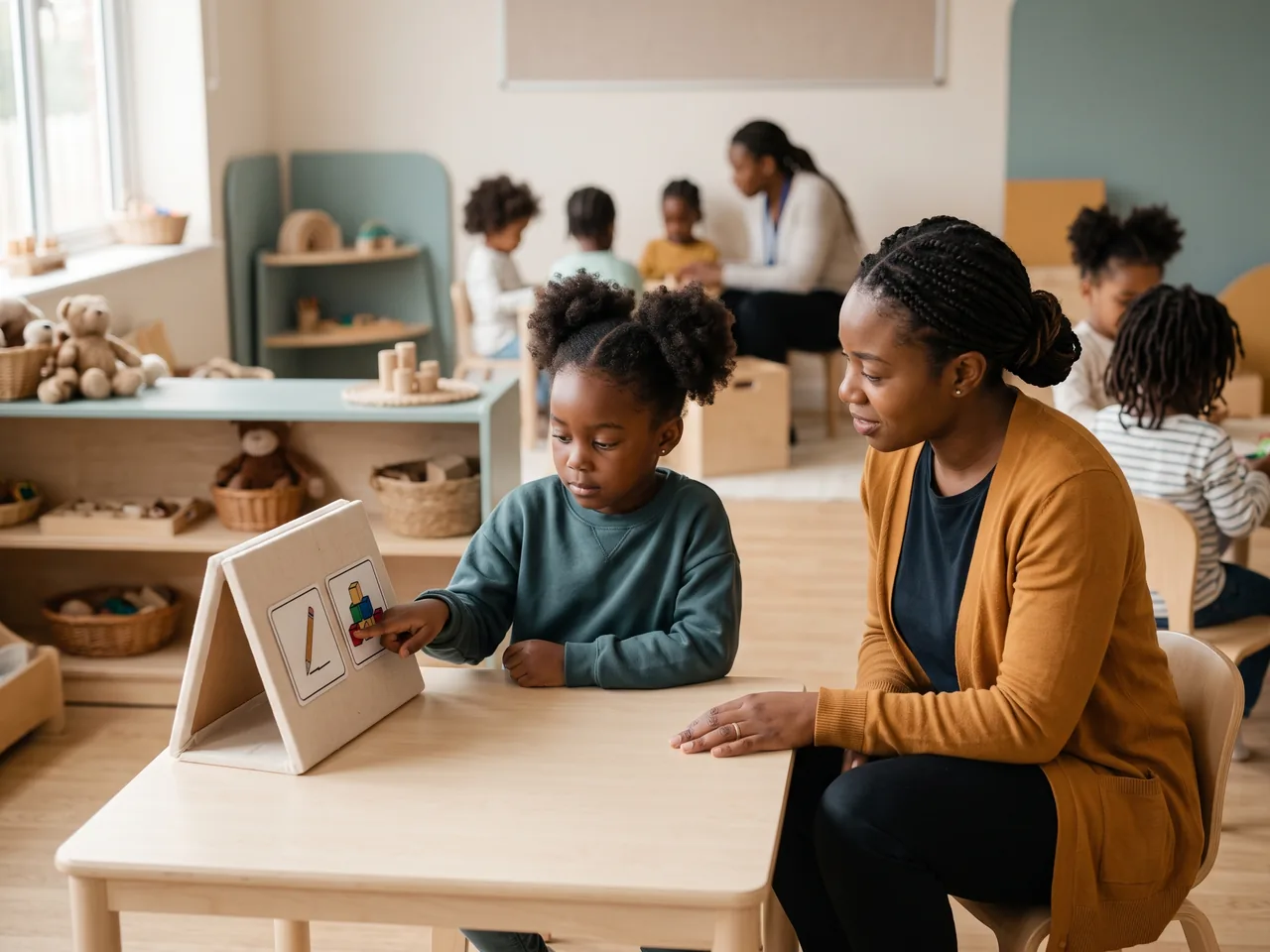
A calm child points to a picture on a propped first-then board while a practitioner sits beside them, with other children in the background.

Area 03

Attention, learning and early academic skills

We build the foundations that make learning possible: sustained attention, following instructions, memory, and the early reading, writing and number skills that follow.

  • Developing attention span
  • Improving concentration
  • Participating in structured activities
  • Following instructions
  • Completing age-appropriate tasks
  • Developing memory and cognitive skills
  • Early literacy and numeracy
  • Reading and writing skills
  • Spelling and language development

What this looks like in practice

Tasks start just short of what the child can already manage. We shorten the activity, break it into steps, and then lengthen it as attention holds for longer.

How we spot progress: staying with a task for longer, following a longer instruction, or completing a task with less adult prompting.

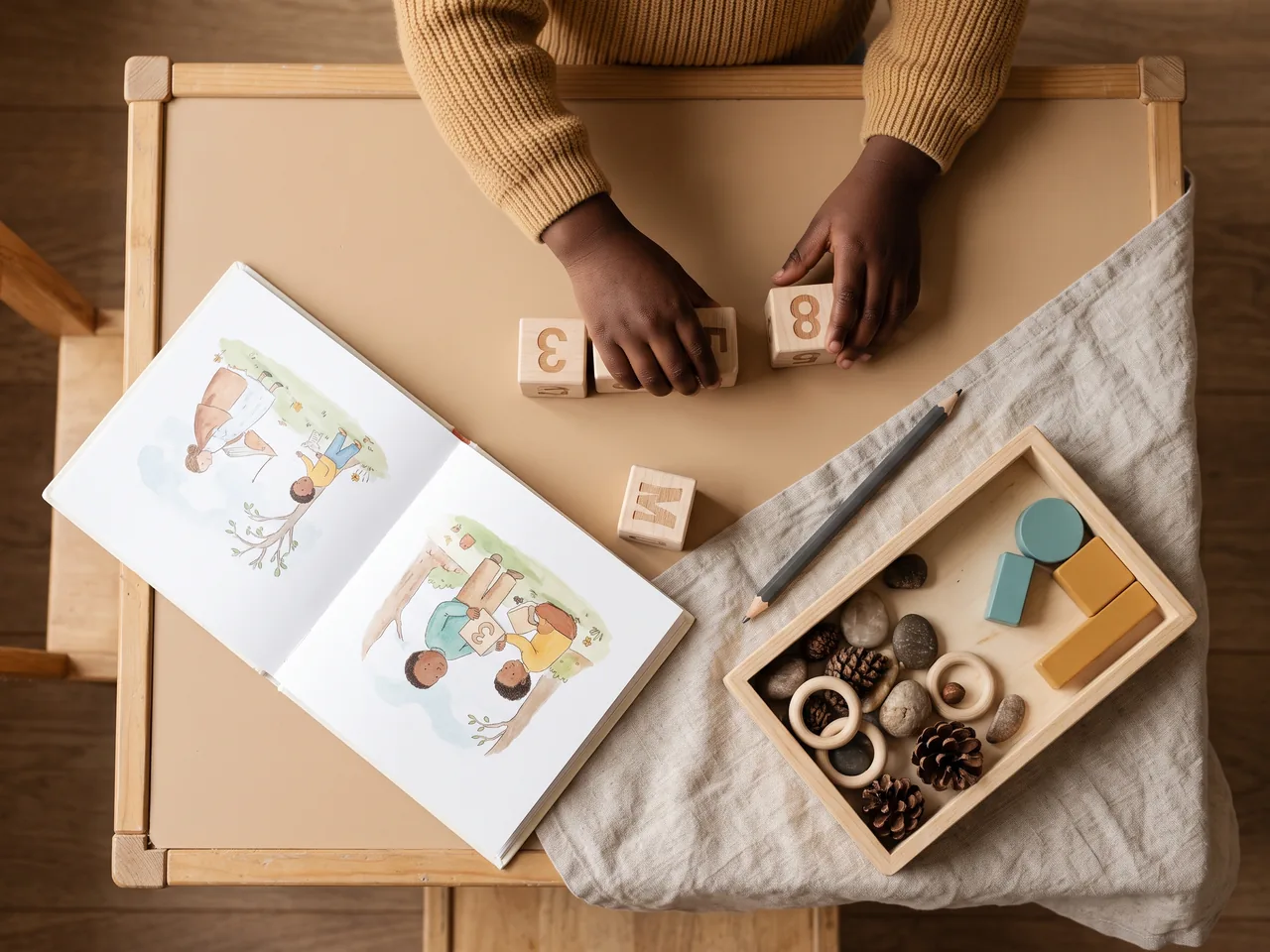
Overhead view of a small table with an open picture book, wooden number and letter blocks, a pencil, and a tray of natural materials.

Area 04

Social and functional skills

Learning to be with other people is its own skill. So is washing your hands, getting dressed, and knowing what to do in a new place. We work on both.

  • Joint attention
  • Turn-taking and sharing
  • Imitation
  • Social interaction
  • Building relationships with peers and adults
  • Classroom participation
  • Self-help skills
  • Independence
  • Adaptive and daily-living skills

What this looks like in practice

We practise social skills in small, predictable groups before expecting them in a busy classroom, and we break self-care routines into steps a child can actually manage alone.

How we spot progress: waiting for a turn, sharing or helping with a task, greeting someone, or completing a self-care step independently.

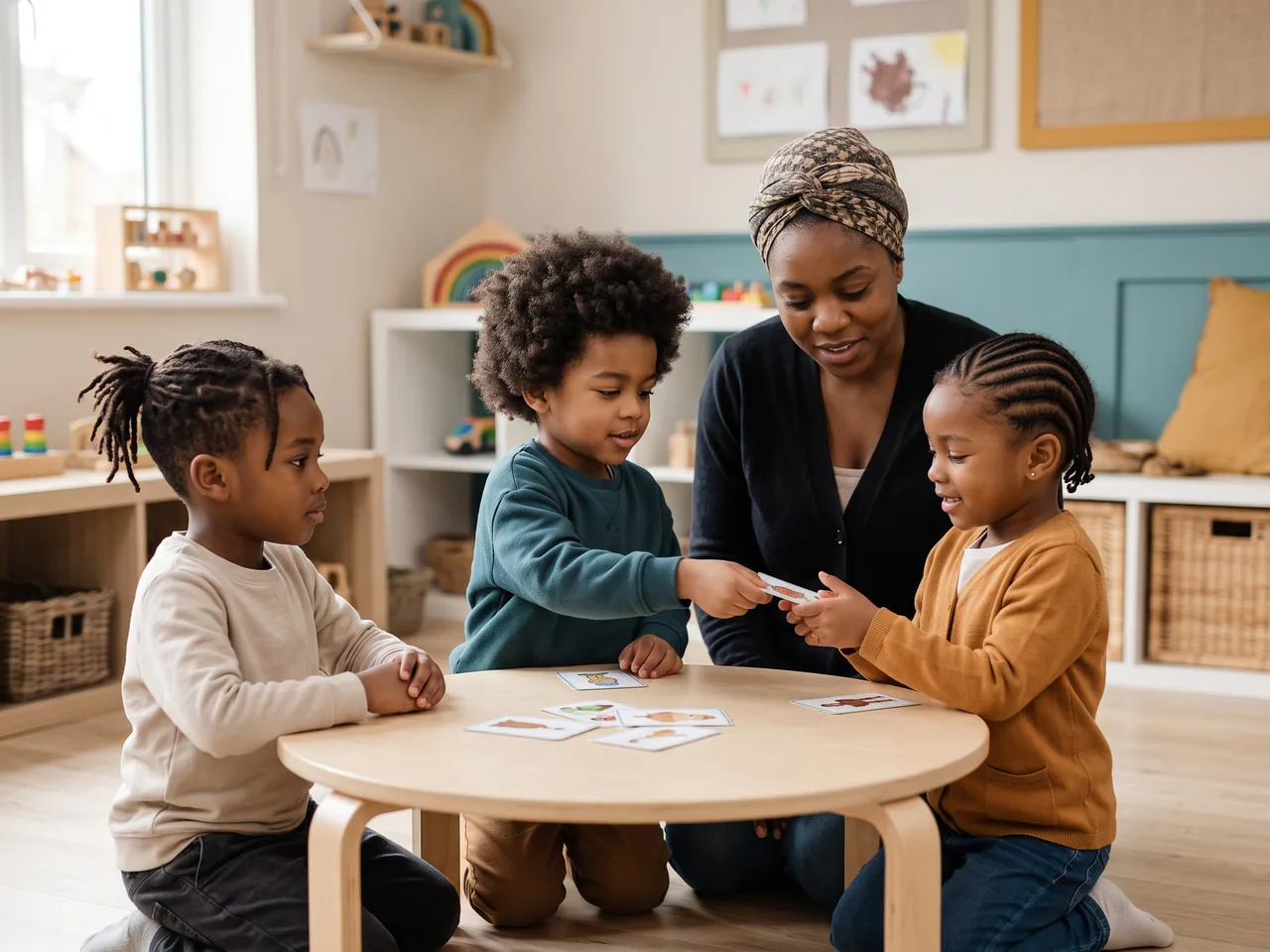
Three children at a round table take turns passing picture cards, with a practitioner leaning in beside them.

Area 05

Fine-motor and pre-academic skills

Before a child can hold a pencil to write, they need a hand that can grip, stabilise and control. These are the skills we build first.

  • Pencil grip
  • Hand strength and coordination
  • Hand-eye coordination
  • Tracing and copying
  • Pre-writing skills
  • Handwriting development
  • Matching, sorting, and categorisation
  • Manipulation and coordination activities

What this looks like in practice

Heavy work first — beads, pegs, sorting, tearing and rolling — because the hand muscles that make writing possible are built long before a pencil appears.

How we spot progress: a steadier grip, greater control when drawing or tracing, or manipulating small items with less fumbling.

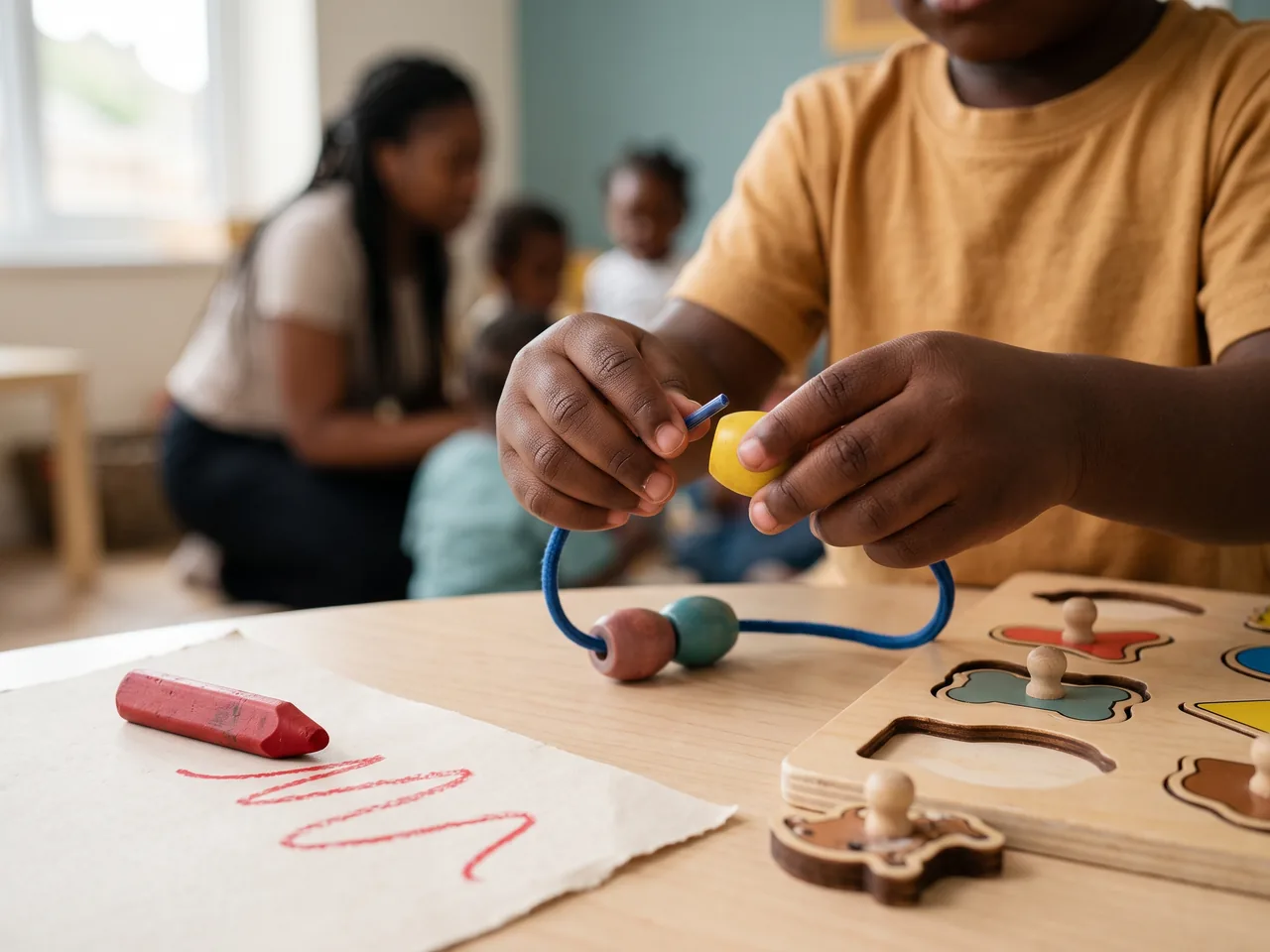
Close-up of a child's hands threading coloured beads onto a lace, beside a chalk crayon with a drawn scribble and a chunky wooden peg puzzle.

Every step matters

Whether a child is learning to communicate a need, follow an instruction, remain engaged in an activity, manage frustration, develop early academic skills, interact with others, or complete everyday tasks independently — every step of progress matters.

We celebrate individual achievements, build on strengths, and provide patient and consistent support as children develop new skills.

Talk to us about your child

Not sure which areas apply to your child?

That is a completely normal place to start. Tell us what you have noticed at home or at school, and we will help you work out where to focus first.